
Blog
Fundraising fatigue: What causes it and how to avoid it
Double GoodNovember 23, 2026 • Read 3 Min
If you lead a PTO, run a booster club, or coach a team and you’ve noticed supporters giving less than they used to, fundraising fatigue could be the cause. Also known as fundraiser burnout, it happens when the same people get tired of repeatedly being asked for support, and the same few volunteers end up doing most of the work. Coordinating timing with other groups and keeping each fundraiser short and easy to do helps erase that fatigue.
What causes fundraising fatigue
Too many asks: Think about what just one week can look like for a busy parent. The PTO asks them to chip in for field trips, their child’s coach asks them to help cover tournament fees, and their niece sends a link to her band fundraiser. Your supporters want to help, but asks add up fast—especially at the start of the school year.
The same small circle: Sellers end up asking the same grandparents and neighbors every time. Even people who love to help can start to feel like supporting is an obligation.
Goals that aren’t clear: If your supporters don’t know what the money will cover, it’s harder for them to see why they should give. And if they never hear what the last fundraiser paid for, they’re less likely to say yes to the next one.
Too much work on too few people: When the same few people run every fundraiser and handle all the orders and delivery, fundraising starts to feel like a second job, and that’s how volunteer burnout sets in. In a survey by PTO Today, 97% of PTO and PTA leaders said the same small group of volunteers does most of the work, and 82% rely on fewer than 10 active volunteers.
How to avoid fundraising burnout
You don’t have to fix everything at once. Use these six steps to ease the load on supporters and volunteers.
1. Coordinate with other groups to avoid overlapping fundraisers. A quick text to the PTO and the other teams is enough to see when groups are fundraising and where asks might overlap. Then pick a date that gives families a little breathing room between them, and if your school keeps a fundraising calendar, add yours. Double Good’s research backs this up: 41% of parents said back-to-back fundraisers see the fewest dollars raised.
2. Pick a date when families have room to say yes. If you’re fundraising during the school year, give families 6 to 8 weeks to settle in before you start your fundraiser, and aim to finish before the holiday rush. Double Good’s data shows the highest dollars raised per event come in fall and spring, so check those windows against what other groups have planned.
3. Tell supporters exactly what the money will cover. Start by setting a realistic goal, then say what it pays for: “We’re raising money to cover the entry fee so our team can play in the tournament.” Fundraisers raise more when people know what their support is going toward. 75% of Double Good sellers who added a note about their cause to their Pop-Up Store® said it helped them raise more.
4. Ask volunteers for small, specific jobs. Tell people exactly what you need and how long it will take. “Could you run the concession stand Friday from 6 to 8?” asked directly to them is easier to say yes to than a group email asking who can help. 58% of PTO and PTA leaders said short, simple, flexible shifts are what bring volunteers back.
5. Share what you raised and say thank you. Thank supporters, tell them the total raised, and say what it’s paying for: “We raised enough to cover our tournament entry fee. Thanks for getting us on the field.” People remember who thanked them, and it makes the next ask easier.
6. Choose a fundraiser that’s easy on everyone. Look for one that keeps the work off your volunteers and makes giving simple, no matter where they live. A good test is to picture the week it runs: if volunteers aren’t needed to collect or hand off anything, and a supporter can give in a couple of minutes, the fundraiser asks less of both.
How Double Good makes fundraising easier
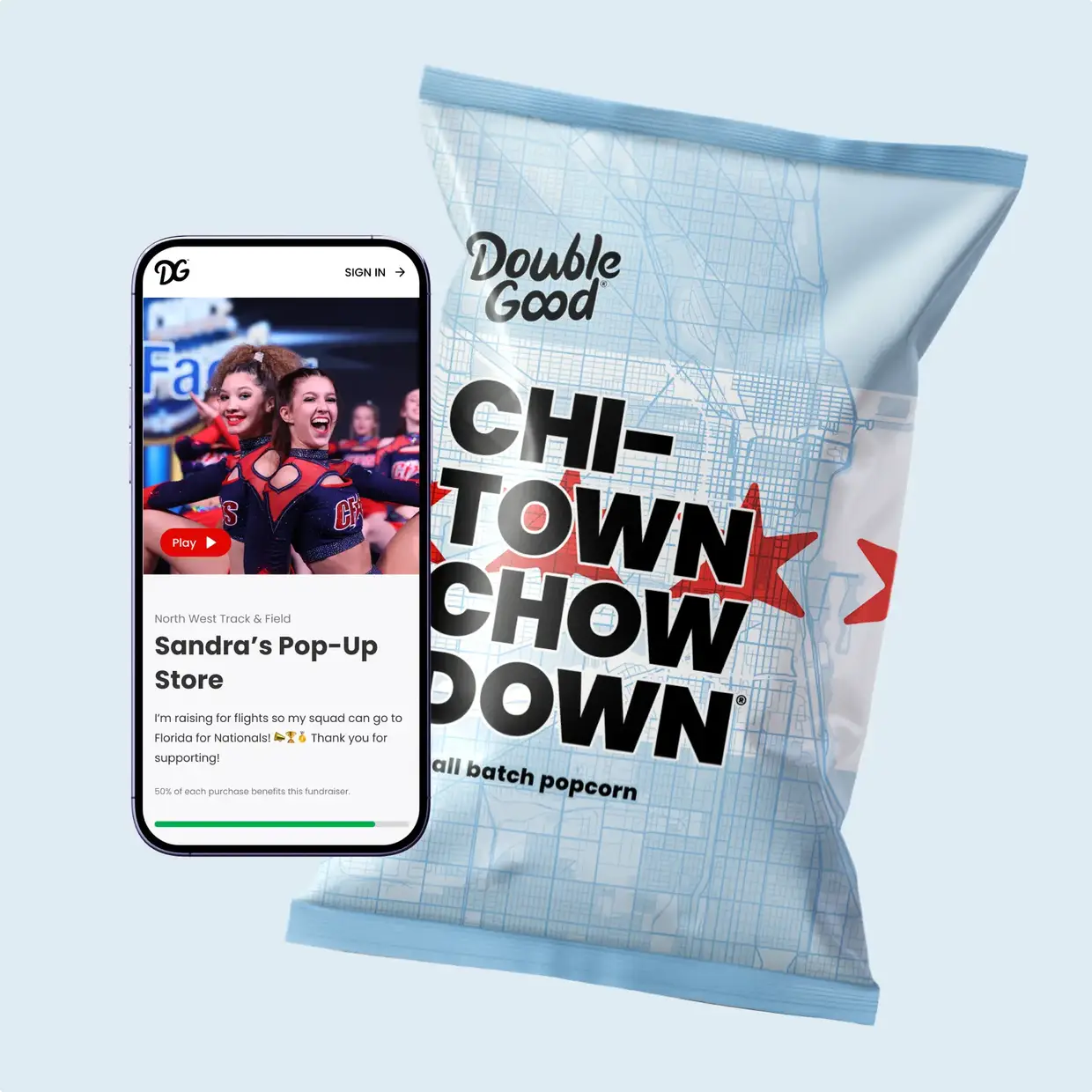
Traditional product fundraisers can mean weeks of collecting order forms and cash, then delivering every order, and most of it lands on the same few volunteers. Double Good is an online fundraising app that takes that away. Supporters order online and the fresh popcorn ships directly to them. Your group keeps 50% of every sale, with no fees or minimums.
Reach beyond the same small circle. Each seller shares their own custom Pop-Up Store® link with the people they know, so a cousin across the country can support the team as easily as a neighbor. When each seller reaches out to their own network near and far, they can reach up to 10 times more people than an organizer’s network alone, according to Double Good data. Ready-made promotional materials help sellers get the word out.
Nothing to collect or deliver. Double Good handles payments and ships every order to the supporter’s door. Nobody has to count cash or track forms, or drive boxes around town, and families have nothing to turn in. That’s what keeps fundraising from feeling like a second job.
A short window gives families a reason to say yes now. You can choose between a 4- or 7-day fundraiser fundraiser. Families can share their store by text, email, or social media whenever they have a minute, without attending an event or signing up for a shift, and supporters only hear from them for days rather than weeks.
As one organizer put it, “sellers are fully engaged and competition heats up fast.” With nothing to collect or deliver, there’s no reason to stretch a fundraiser out for weeks, and a shorter window means fewer days of asking.
Your community wants to help, and your volunteers already have plenty to do. Set up a fundraiser that asks less of both.
Frequently asked questions
Start on a Monday or Tuesday, after families have settled in, and away from holidays and other fundraisers. Double Good’s data shows that fundraisers started on a Monday or Tuesday perform better than those that start on a weekend. Whether it’s a school fundraiser or a team’s, work backward from when you need the money and check what else is on the school calendar before you pick a date.
There’s no single right number. Start with what each group needs to cover, and if one well-timed fundraiser can do it, you may not need another. If you’re planning for the whole school, check in with every group, or look at a shared calendar to see where fundraisers overlap. Then leave a few months with no asks at all so you can avoid fundraising fatigue.
Rotate who leads your fundraiser each year, and ask each helper to take one specific job instead of “helping out.” Then thank people publicly for what they did. If a parent takes pictures at the event, give them a shout-out when you share the results.
Recent Blog Posts
- Baseball team fundraising ideas players and booster clubs can get behind
- Online product vs. donation fundraisers: which is right for your group
- How to start a fundraiser for your group
- Basketball fundraising ideas for school, club, and AAU teams
- Hillcrest Hawks Softball Team Hits Fundraising Grand Slam
- Traditional vs. online fundraising: how product fundraisers compare
- How a successful fundraiser helped more kids play travel soccer in Northern Virginia
- Soccer fundraiser ideas for club, school, and rec teams
Inspired? Let’s get fundraising.
Get ready to boost your fundraising game. Create a Pop-Up Store that pops and helps you meet your goals.
Recent Blog Posts
Explore how Double Good Days lifts us all up