
Blog
How to start a fundraiser for your group
Double GoodNovember 10, 2026 • Read 7 Min
Whatever group you’re raising money for, getting a fundraiser started doesn’t have to be complicated. A successful fundraiser comes down to a few early decisions: when it runs, how much you need to raise, and for what, and who’s helping you pull it off. Get those set now, and you’ll spend less time scrambling once your fundraiser is live.
How to start a fundraiser for your group: 6 essential steps
Use this fundraiser checklist to get your group organized and ready for launch:
1. Pick your dates. Work backward from when your expenses are due to figure out when to run your fundraiser. Leave enough time to plan and get everyone on board.
2. Set a fundraising goal. Start with what you need to pay for, like uniforms or tournament travel, to set a dollar goal. Then, divide it by how many sellers you expect to figure out how much each seller needs to raise.
3. Get approval and ask for help. Check whether you need approval from your school or organization. Recruit a few people to help split the work with you.
4. Tell your sellers the plan early. Get your team together and walk them through when the fundraiser starts and how to participate.
5. Take your fundraiser live and share. Let supporters know why your group is raising money and how they can help. Encourage your sellers to share the cause with family and friends throughout the fundraiser.
6. Celebrate and say thanks. After your fundraiser ends, share how much you raised and what it will pay for with your group and supporters. Take time to celebrate and thank everyone who helped make it happen.
1. Pick your fundraiser dates
Start by choosing your fundraiser dates. Check when your group will need the money, then work backward. Leave enough time to organize your fundraiser, run it, and get the money in your account, since payout times vary by fundraiser type.
That prep time matters more than you think. Double Good fundraisers scheduled at least 3 weeks in advance raise over 2.7 times more than last-minute ones scheduled just a couple days out, so get your dates on the calendar early.
The type of fundraiser you choose matters, too. Remember organizing the school carnival? You spent weeks planning and rounding up volunteers, and you're probably still sticky from the cotton candy machine. Even a bake sale or car wash takes time to organize and people willing to pitch in. An online fundraiser, on the other hand, can be up and running in minutes, without all the logistics of an in-person event.
Double Good fundraisers run for 4 or 7 days. Four days keeps everyone focused and works well when you need the money fast. Seven gives busy families more room to share. Either way, your earnings go straight into your team’s account within 1-2 weeks after your fundraiser ends.
2. Set a fundraising goal
Start with what you’re raising money for, then put a number on it. Maybe it’s $3,000 for new uniforms or flights to a tournament. A specific number is a lot easier for your team to rally around than “raise some money.”
Next, figure out how much you need to sell. With Double Good, your group keeps 50% of every sale, so a $3,000 goal means selling $6,000 worth of popcorn.
From there, think about how many sellers you'll have and what each person can realistically sell. A good starting point is about $350 in sales per person. That’s $175 per seller raised for your group, which is the average for what Double Good sellers raise.
At that pace, a $6,000 goal takes about 17 sellers. If your team is smaller, raise each person’s goal a little. If it’s bigger, you may beat your total. Either way, giving each seller their own number to work toward helps everyone stay accountable.
3. Get approval and ask for help
Before you get too far, check with your league or school to see if you need their approval. Some have rules about what kinds of fundraisers groups can run, and some keep a calendar so two aren’t selling the same week.
And don’t do it alone. Ask one parent to handle the reminder group texts and another to keep track of fundraising progress. Even two helpers can make your fundraiser easier to organize.
4. Tell your sellers the plan early
Get your team together before your fundraiser starts. A quick kickoff meeting at practice, after class or on a video call is enough. Tell the group what you’re raising money for and when it starts, then have them complete any prep work in the room.
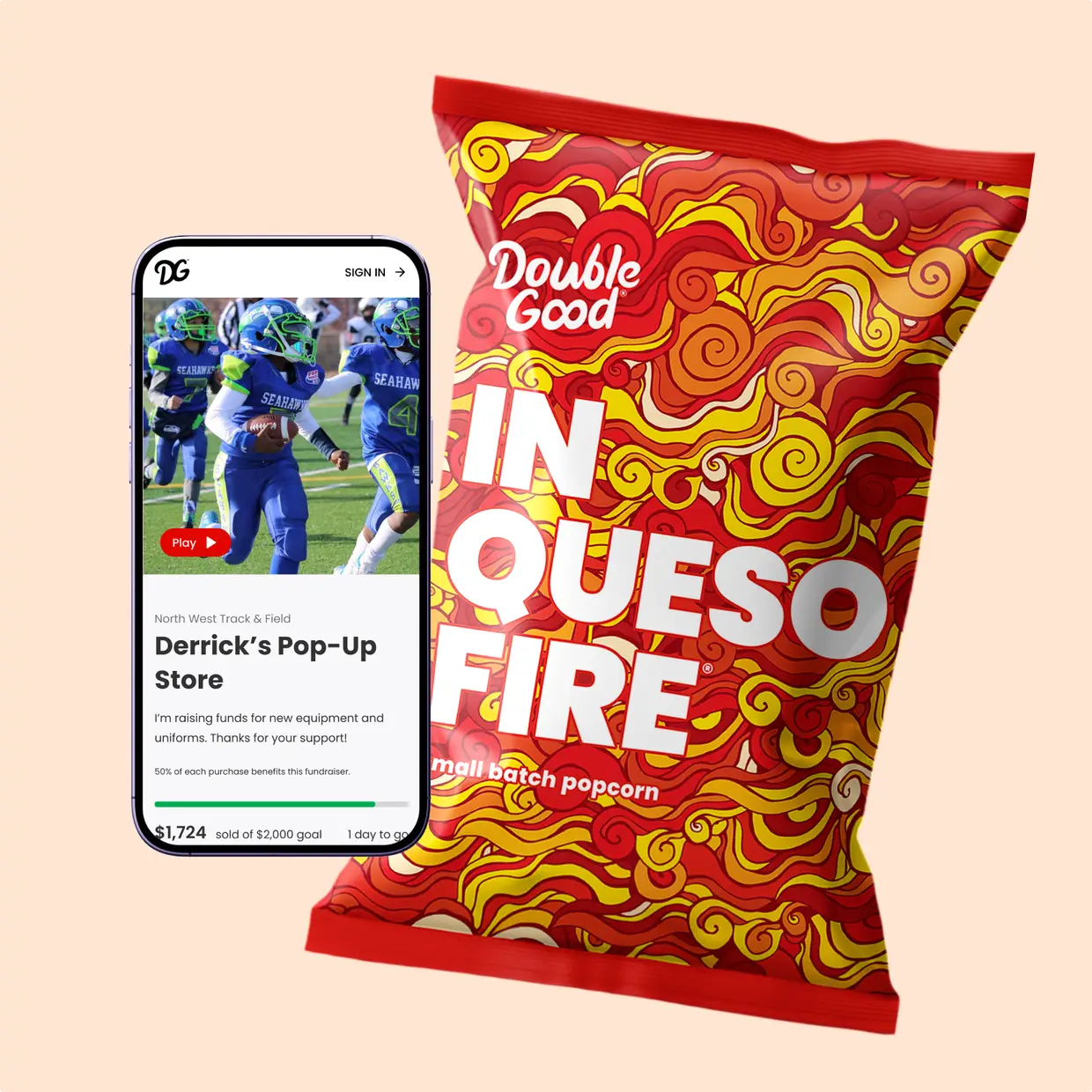
For example, Double Good sellers each get their own online store, called a Pop-Up Store®, with a custom link they can share. Have everyone join and set theirs up before they leave.
“We get our players and parents in a room, have them pull out their phones, download the app, and join the fundraiser right there and then.” —Coach Mac, Nation Ford High School, raised $8,500 in a 4-day fundraiser
Coach Mac isn’t alone. Of the top-performing Double Good organizers, 42% had sellers join during a team meeting. While everyone’s together, have sellers add a photo and a short note about what they’re raising money for. Three quarters of Double Good sellers who added a store note said it helped them raise more.
5. Take your fundraiser live and share
Once your fundraiser is live, sharing is the main job. Have sellers start with people who are most likely to buy, like parents, grandparents or close family friends, then widen out from there. Day-by-day sharing plans take the guesswork out of what to post and when.
Then keep at it. Double Good sellers who share daily raise 75% more than those who don’t. Encourage your sellers to text their group chats and post on social media, and point them to these tips on how to share their store.
It helps to keep your team’s energy up, too. Check in daily by posting the team’s progress and giving shout-outs, and consider incentives or small prizes when sellers hit milestones. The Double Good leaderboard ranks sellers by how much they’ve raised, which adds some friendly competition. Watch this video for tips on how to motivate your fundraising team.
6. Celebrate and say thanks
When your fundraiser wraps, tell your organization and supporters how much you raised and what it’s paying for: “We raised $3,200. That’s new jerseys for all 18 players!" Once you've used the money, show them the result. Take a picture and post it or send a text.
Also consider making the thank you personal. If parents spent Saturday running the concession stand, tell them you appreciate their time. If friends and family bought popcorn, send them a thank you note through the Double Good app. People remember who thanked them, and that makes next season’s ask easier.
How to start your fundraiser with Double Good
Once you’ve got your dates and a goal, you’re ready to start – it only takes a few minutes to set up. This short video walks you through it in the Double Good app.
In the app, the Organizer Checklist walks you through each step, from inviting your team to adding your payout details, so you always know what comes next.
Supporters order online and the popcorn ships straight to supporters, so there’s nothing for you to store or deliver. Your group keeps half of every sale, with no fees or minimums.
Whether this is your first fundraiser or you’ve done it before, setup takes just a few minutes.
Frequently asked questions
It depends on the type of fundraiser. Events like carnivals or bake sales usually require buying supplies up front, and some product fundraisers make you buy the inventory before you sell anything. Starting a fundraiser with Double Good is free, with no upfront costs, fees, or minimums.
Your total comes down to how many sellers you have participate and how much each one can sell. With Double Good, your group keeps 50% of every sale and the average participant raises $175. If 20 sellers raise $175, that brings in $3,500 for your organization. More sellers, or more sales per seller, means a bigger profit.
Most online fundraisers work through an app or website where each seller gets a link to share from. With Double Good, you download the app and invite your team to join with an automated event code. Then each seller gets their own Pop-Up Store® to personalize and share with family and friends.
Recent Blog Posts
- Basketball fundraising ideas for school, club, and AAU teams
- Hillcrest Hawks Softball Team Hits Fundraising Grand Slam
- Traditional vs. online fundraising: how product fundraisers compare
- How a successful fundraiser helped more kids play travel soccer in Northern Virginia
- Soccer fundraiser ideas for club, school, and rec teams
- How much should a fundraiser raise per person?
- Football Fundraising Ideas that Work Before Kickoff
- Cheer fundraising ideas for every point in your season
Inspired? Let’s get fundraising.
Get ready to boost your fundraising game. Create a Pop-Up Store that pops and helps you meet your goals.
Recent Blog Posts
Explore how Double Good Days lifts us all up